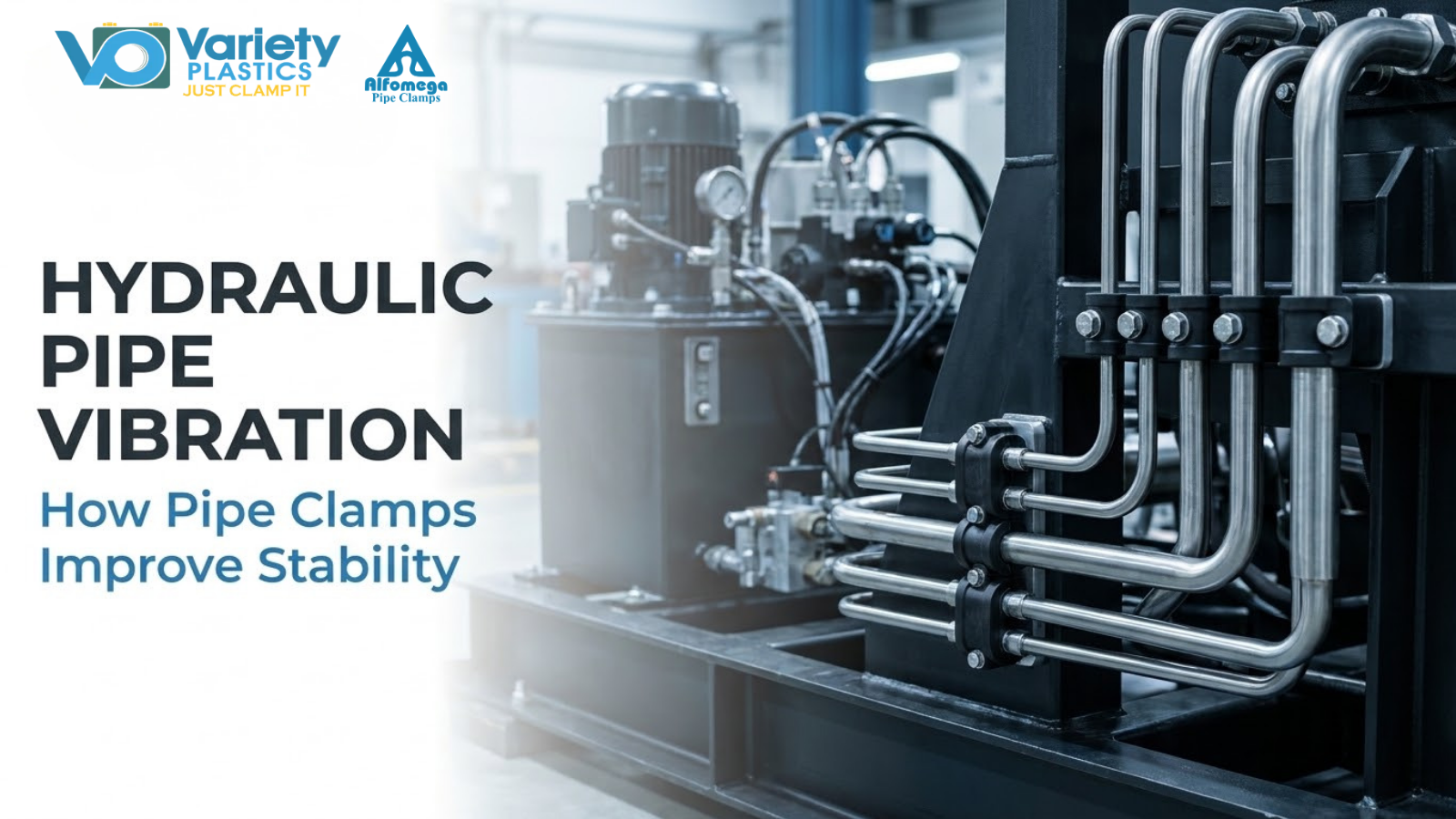
A hydraulic system may run smoothly during commissioning and develop rattling lines, rubbing marks, or loose supports months later. These symptoms are easy to dismiss as minor noise, but they can signal movement that deserves inspection. Hydraulic pipe vibration is influenced by pumps, pressure pulsation, machine motion, support spacing, and the geometry of the pipe route.
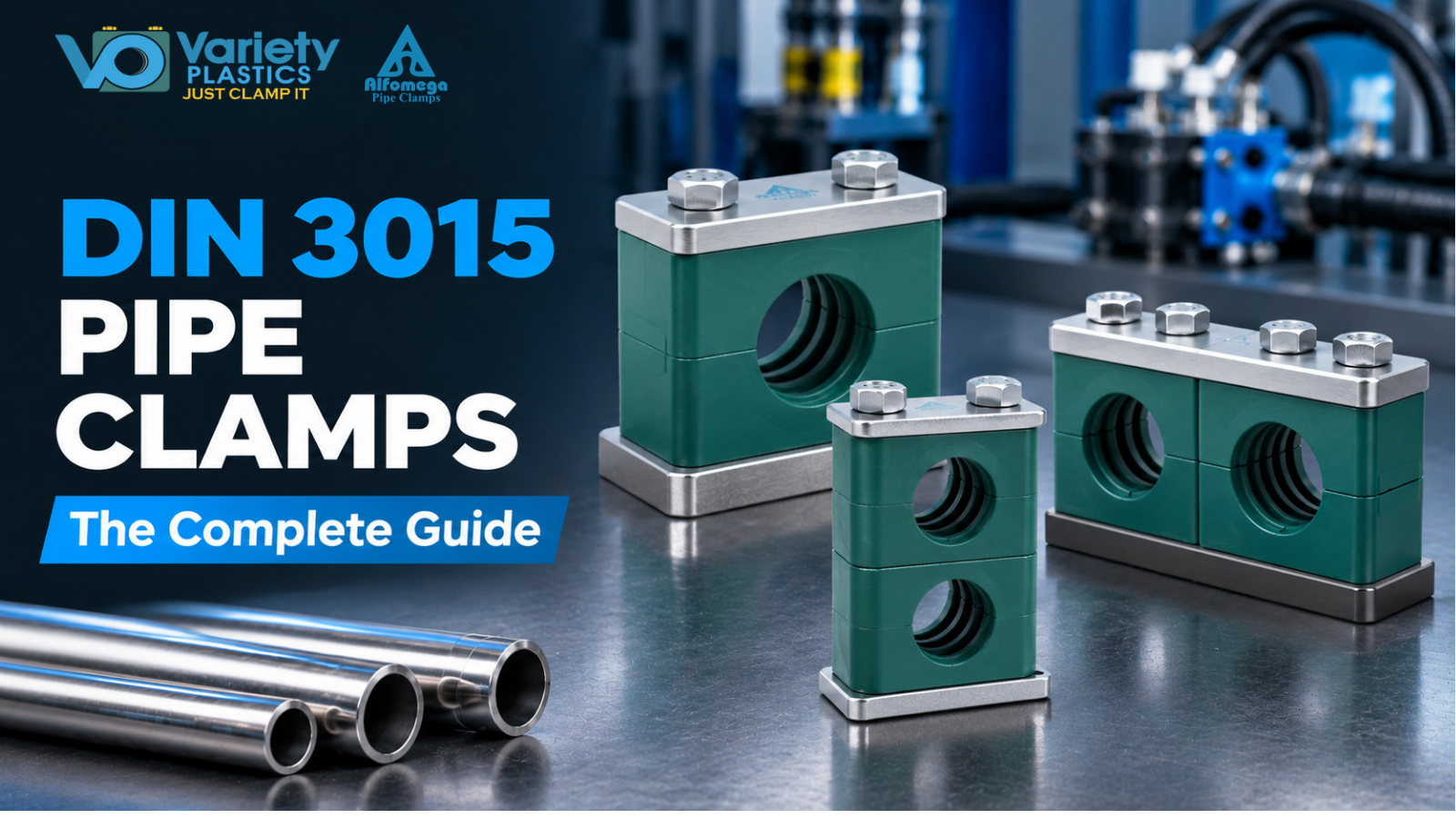
Pipe clamps are one part of a wider vibration-management strategy. Variety Plastics, manufacturer of ALFOMEGA industrial pipe clamps, offers several clamp series and materials that can be considered when designing or maintaining hydraulic line supports.
What Causes Hydraulic Pipes to Vibrate?
Hydraulic pumps generate flow and pressure variations, while valves and actuators create changing loads. The machine frame itself may vibrate due to motors, rotating equipment, or external forces. These inputs can excite unsupported lengths of pipe or tubing.
The line route also matters. Long straight runs, unsupported bends, and components mounted at different points can respond differently to motion. A tube touching a sharp edge may experience rubbing even when the system pressure remains within its design limits. The right response is to identify the source and path of movement rather than simply adding clamps at random.
Why Pipe Support Is Important
A properly designed support system helps hold lines in their intended positions and limits unwanted contact with adjacent components. This can reduce the chance of abrasion, movement-related damage, and avoidable maintenance work. Depending on the clamp material and installation, supports may also influence how vibration is transmitted through the assembly.
However, a clamp does not eliminate all vibration. Incorrect placement or excessive restraint can introduce stresses. Vibration problems may also require changes to pump mounting, routing, flexible connections, or system operation. Treat clamp selection as one part of the engineering solution.
Warning Signs to Look For
Common signs include polished wear marks where a tube contacts another surface, repeated loosening of hardware, unusual rattling, cracked brackets, or damaged protective coatings. A line that visibly moves during machine operation should be assessed carefully. Leaks, fatigue cracks, and abnormal noise require appropriate inspection and corrective action.
Never touch or adjust a pressurized hydraulic line to locate vibration. Follow the site's isolation, depressurization, and lockout procedures before inspection. High-pressure fluid injection injuries can be serious even when a leak looks small.
Choosing a Clamp for Vibration-Prone Areas
Match the clamp to the line diameter
The bore must suit the actual outside diameter of the supported tube or pipe. Incorrect sizing can compromise retention or create undesirable localized loading. Use the supplier's technical drawing rather than estimating from a nominal pipe designation.
Select the series for the installation
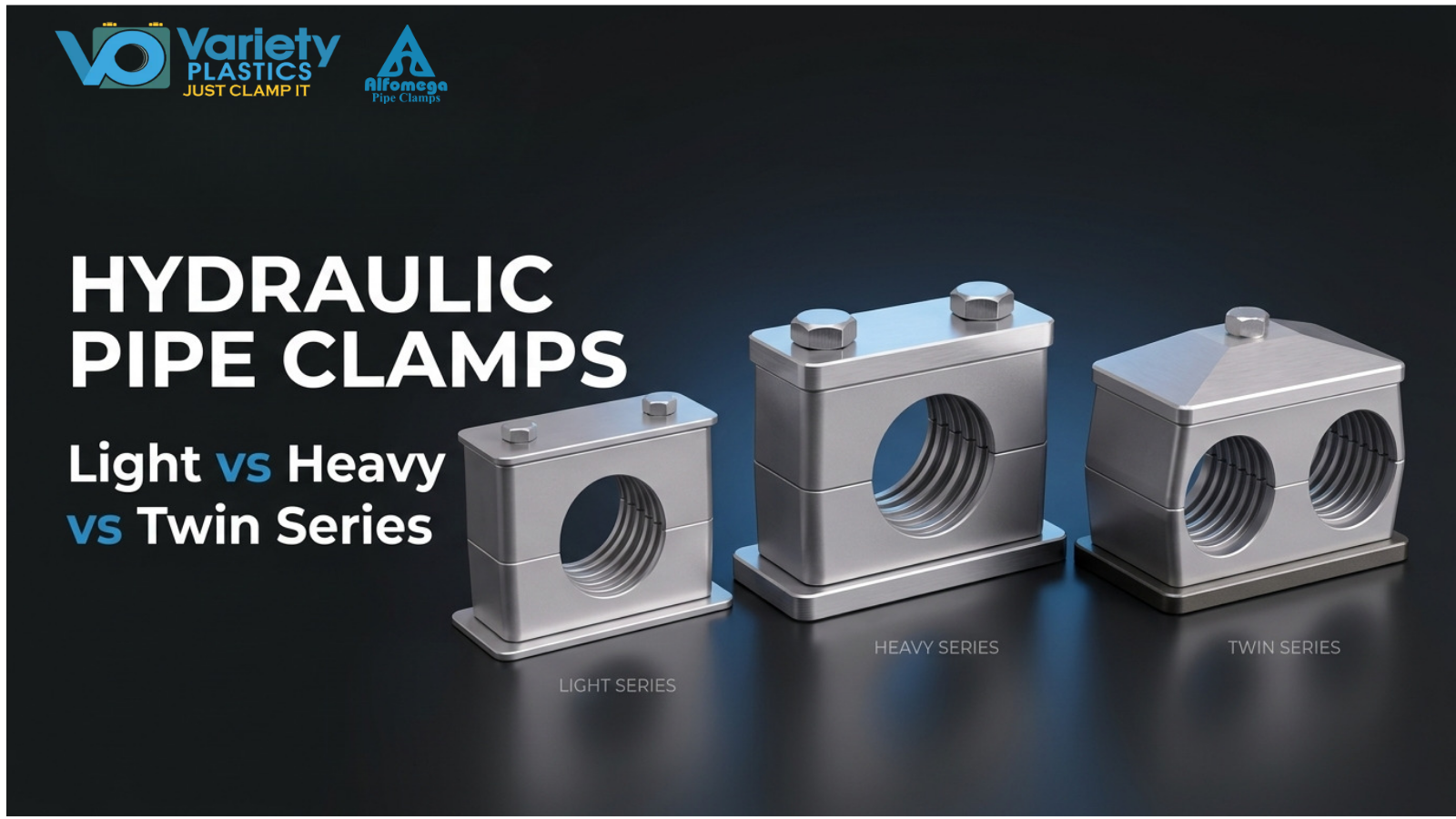
Light Series assemblies may suit compact support locations, while Heavy Series assemblies may be considered where more substantial mechanical support is needed. Twin Series clamps can organize parallel lines, but paired lines should be assessed for differences in movement and service needs.
Review the material
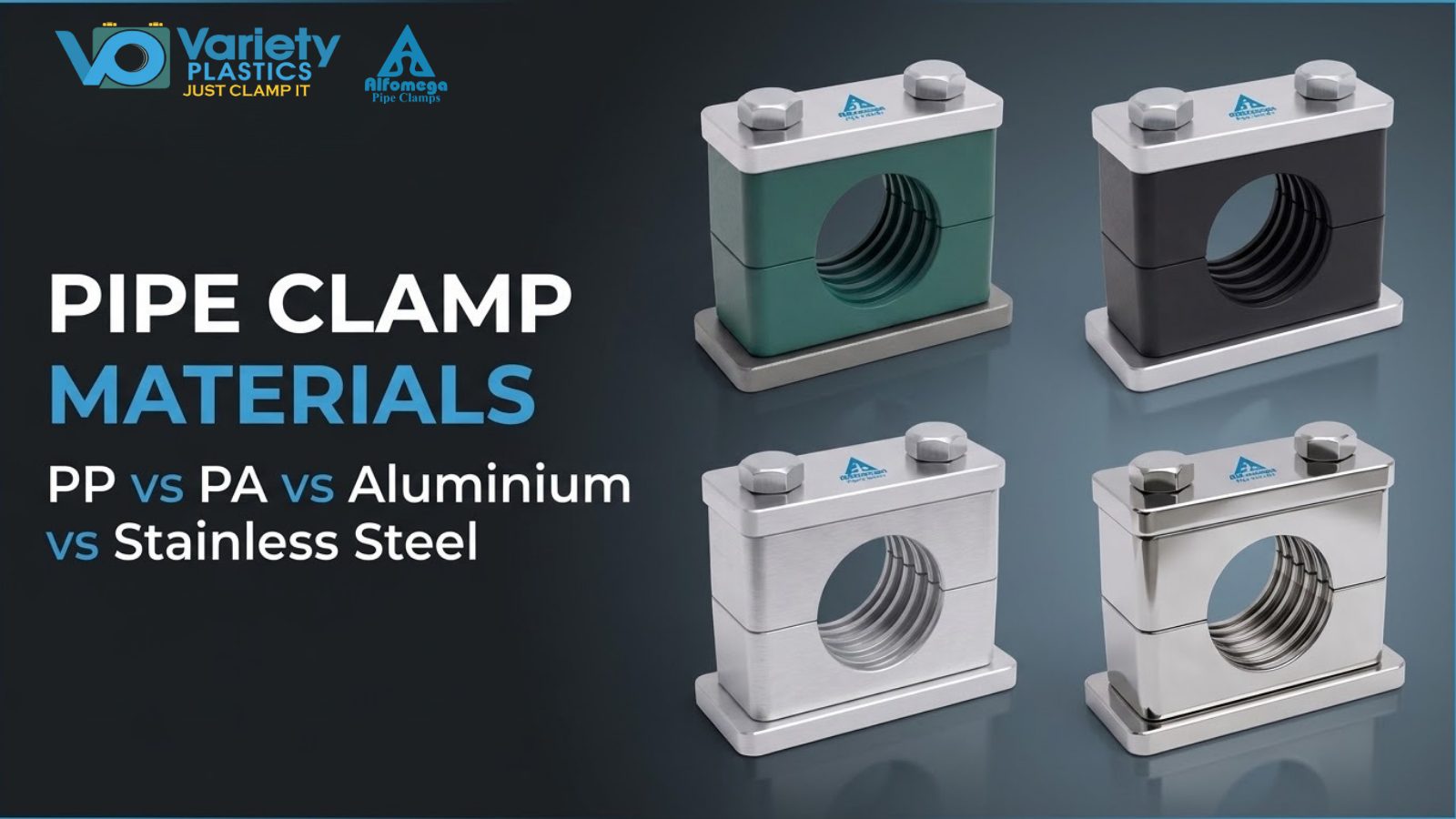
Polypropylene and polyamide have different mechanical and environmental properties. Metal options such as aluminium and stainless steel have their own advantages and limitations. Select the material based on temperature, exposure, loads, and the complete assembly design—not on an unsupported promise that one material will always damp vibration better.
Check mounting rigidity
A clamp attached to a weak or flexible bracket may move with the pipe. Review mounting plates, bolts, rails, frame strength, and the manufacturer's fastening instructions. Repeated loosening may indicate a wider installation issue rather than simply a need for tighter bolts.
Clamp Positioning: Think About the Whole Route
A useful inspection begins with a drawing of the hydraulic circuit and physical pipe route. Mark the pump, valves, fittings, bends, and areas where the frame moves. Identify unsupported spans and locations where lines could rub. Support positions should account for thermal movement and assembly tolerances, not just equal spacing.
Clamps near bends and fittings need particular attention because pipe movement can create concentrated loads. Avoid positioning hardware where it blocks routine access to valves or makes replacement difficult. Follow the equipment manufacturer's engineering requirements for support spacing and attachment points.
A Practical Maintenance Checklist
- Inspect the machine under approved safe operating procedures and record unusual movement or noise.
- Isolate and depressurize the system before physical examination.
- Check tube surfaces for abrasion, cracking, corrosion, and contact marks.
- Inspect clamp bodies, mounting plates, bolts, and brackets for wear or damage.
- Compare the installed clamp size and material with the intended specification.
- Review the underlying vibration source before modifying the support layout.
- Document corrective actions and recheck the installation after return to service.
Common Misconceptions
“More clamps always mean less vibration” is not necessarily true. Poorly placed restraints can create new stress concentrations. “Heavy Series solves every vibration problem” is also incorrect; the problem may originate in pressure pulsation or equipment alignment. And a quoted vibration-reduction percentage is meaningful only when supported by testing for the specific assembly and conditions.
Frequently Asked Questions
Can pipe clamps completely stop hydraulic vibration?
No. They can help control line movement, but the vibration source and overall system design also need attention.
What is the best clamp for a vibrating hydraulic line?
It depends on line diameter, mechanical loads, temperature, mounting structure, and the nature of the vibration. Obtain technical guidance for the exact installation.
Should loose clamp bolts simply be tightened?
Not without inspection. Check for damaged hardware, inadequate mounting, wrong components, and other underlying causes. Follow specified tightening procedures.
Can vibration damage hydraulic tubing?
Repeated movement and contact can contribute to wear and fatigue. Inspection and correct support design help manage those risks.
Questions to Ask Before Ordering
A useful quotation request is more than a product name. Share the outside diameter of the pipe or tube, the number of lines, the installation orientation, the material preference, and the mounting surface. Include drawings or photographs when retrofitting an existing machine. If the assembly will face unusual heat, chemicals, salt exposure, shock, or repeated maintenance, explain those conditions rather than assuming a standard catalogue item will be appropriate.
For OEM orders, provide the expected quantity, desired delivery schedule, preferred hardware finish, and any inspection or documentation requirements. This information helps a manufacturer confirm availability and identify a suitable configuration. A clamp that fits dimensionally may still need a different material or mounting arrangement for the operating environment.
Why Work With Variety Plastics?
Variety Plastics manufactures industrial hydraulic pipe clamps in Sidhpur, Gujarat, India, under the ALFOMEGA brand. Its published range covers DIN 3015-based Light, Heavy, and Twin Series clamps, several clamp materials, mounting options, and protective accessories. For equipment manufacturers and industrial procurement teams, a focused product range can simplify discussions about repeat orders, dimensions, and application-specific requirements.
Instead of selecting by appearance alone, ask for the relevant technical drawing, available size range, assembly components, and material specification. Product suitability should be confirmed against actual service conditions. Explore the Variety Plastics product range or contact the team for a quotation. The publishing agent should replace homepage fallback links with the verified product and enquiry URLs.